

How to Pack a Storage Unit Efficiently: A Self-Storage Guide for Calera Renters
Packing a storage unit is not only about fitting more items inside. The way you organize your belongings affects how easy it is to access them later.
For renters in Calera, OK, storage may be part of a move, a home renovation, or a seasonal transition. A good packing plan helps you protect your belongings, find items when you need them, and make better use of your available storage space.
Before moving everything into your unit, take time to plan your layout, prepare your supplies, and organize items based on how often you may need to access them.
Gather the Right Packing Supplies
The right packing supplies help protect your belongings and make your storage unit easier to organize.
Start with sturdy boxes that are similar in size whenever possible. Uniform boxes are easier to stack, label, and arrange compared with a mix of different containers.
Keep these basic supplies ready before packing:
- Sturdy boxes: Use clean, strong boxes that can support stacking.
- Packing tape: Seal boxes securely before placing them in storage.
- Labels and markers: Clearly label each box so you can identify contents without opening everything.
- Breathable covers: Use cloth covers or moving blankets to protect furniture and larger items while allowing airflow.
- Tarp or pallets: Place items on a raised surface when needed to keep boxes away from direct contact with the floor.
Preparing supplies before you start saves time because you won’t need to stop mid-load to find tape, labels, or covers.
Plan Your Storage Unit Layout
A storage unit is easier to manage when you create a plan before loading your belongings.
Start by grouping items based on how often you expect to use them. Items you may need more frequently should stay closer to the entrance, while long-term storage items can be placed farther back.
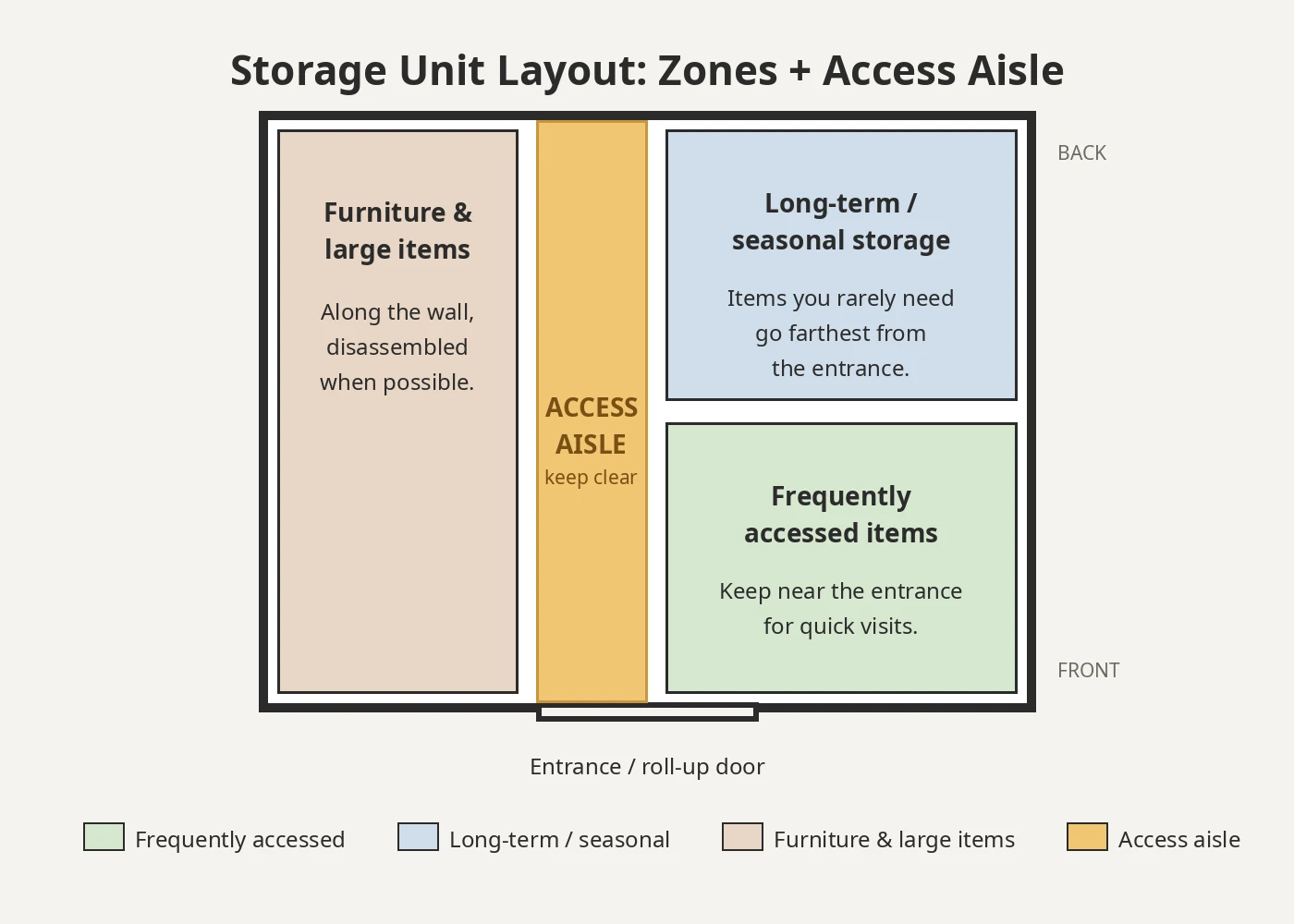
When planning your layout:
- Create an access aisle so you can reach items without moving multiple boxes.
- Keep labels facing the aisle so you can identify boxes quickly.
- Place similar categories together, such as seasonal items, household goods, or furniture pieces.
- Leave frequently accessed belongings in easier-to-reach areas.
A simple layout plan means you can reach what you need without moving everything else out of the way.
Your packing approach can also help you think through your storage needs before moving everything in. Review our storage unit sizes and prices to choose a unit that fits your plan.
Load in the Right Order
The order you load your storage unit can affect how easy it is to access your belongings later.
Start with larger and heavier items first. Place heavier boxes and furniture pieces on the bottom, then stack lighter items on top when appropriate. This helps create a more stable arrangement and keeps smaller items easier to access.
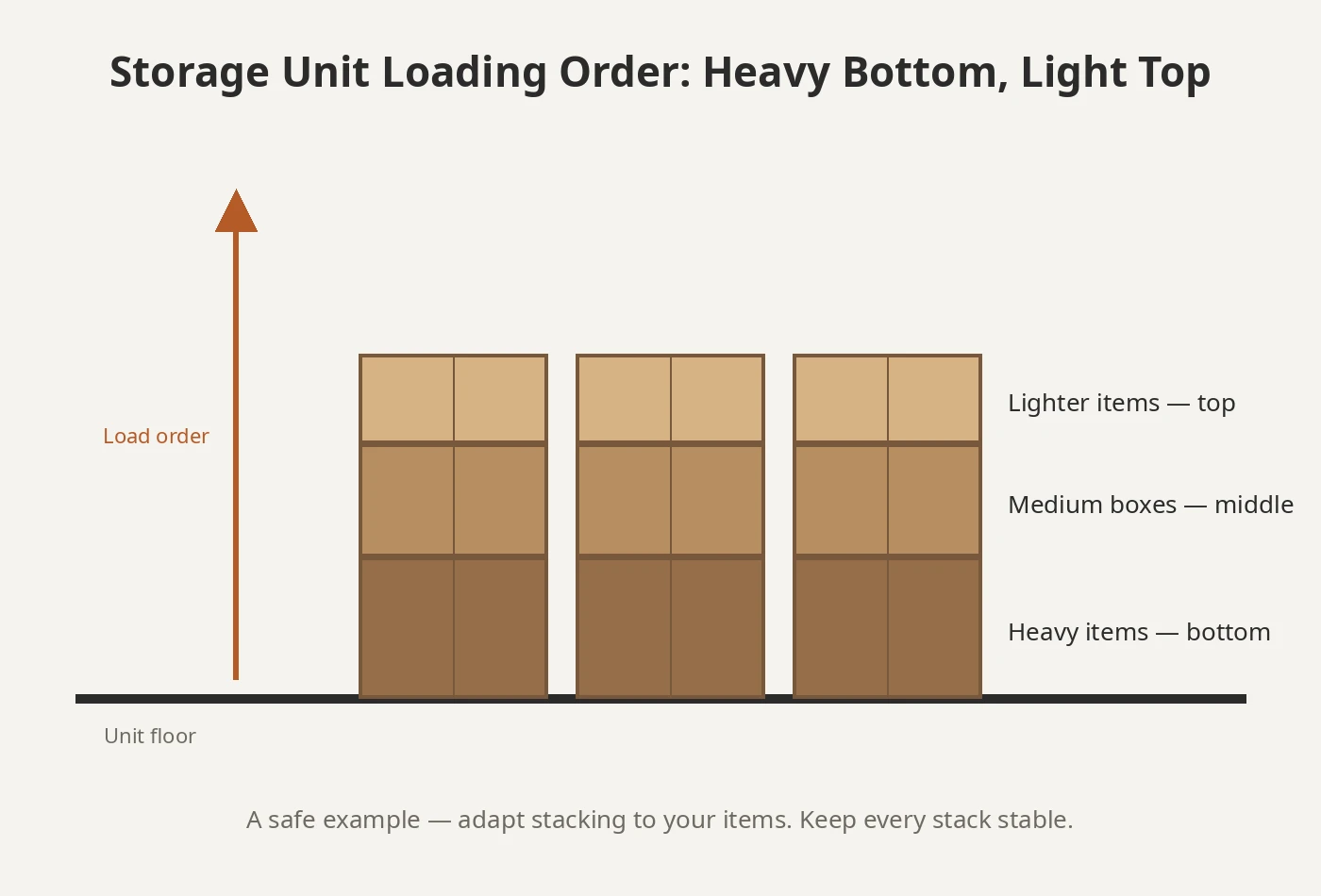
Follow a simple loading order:
- Prepare larger items first: Disassemble furniture when possible and protect loose parts so they stay together.
- Load heavier belongings at the bottom: Use heavier boxes and larger items as the base of your arrangement.
- Keep lighter items accessible: Place smaller or lighter boxes where they are easier to reach later.
- Use vertical space carefully: Stack items upward while keeping the arrangement stable and easy to access.
- Fill empty spaces: Use smaller items to fill gaps without creating unstable stacks.
Loading items without a plan can make future access more difficult. Taking a few extra minutes during the initial load can make future visits much easier.
Protect Your Belongings in Storage
Protecting your belongings starts before they enter the storage unit. Cleaning, preparing, and organizing items properly can help keep them in better condition while stored.
Check Storage Rules Before Packing
Before packing your belongings, review your rental agreement and storage guidelines. Avoid storing items that can leak, spoil, or create safety concerns. Planning ahead helps you pack responsibly and avoid problems later.
Furniture often needs extra preparation because wood, fabric, and other materials can require careful handling before storage. Follow our guide on how to prepare furniture for storage for additional preparation steps.
For storage during a home project, renovation, or remodeling period, a planned storage approach can help protect belongings while work is being completed. Read our renovation storage guide for more ideas.
- Clean and dry belongings before packing them away.
- Use breathable covers for furniture and larger items instead of trapping moisture with unsuitable materials.
- Fill boxes properly so items do not shift unnecessarily during storage.
- Keep an inventory list outside the unit so you can reference stored items without opening every box.
- Check on your belongings during longer storage periods to make sure everything stays organized.
5 Mistakes to Avoid When Packing a Storage Unit
A good packing plan is about more than fitting everything inside. Small mistakes during loading and organization can make it harder to find items later.
- Blocking Your Access Path: Filling every open space may seem efficient, but removing your ability to reach stored items can create problems later. Leave a clear path so you can access belongings without moving everything out first.
- Using Unorganized Containers: Using random bags, boxes, and containers without a system makes it harder to identify your belongings later. Use labels and group similar items together so you know where everything is located.
- Storing Items Before They Are Ready: Placing damp, dirty, or unprepared items into storage can create problems over time. Clean and dry belongings before packing them away.
- Labeling Only One Side of Boxes: Boxes may be placed in different positions during loading. Labeling only one side can make identification harder once items are stacked together.
- Packing Without a Layout Plan: Loading items without thinking about future access often leads to unnecessary unpacking. Create a simple plan before placing everything inside.
If your storage needs are connected to a move, organizing your unit during the packing process can make the transition easier. Learn more with our moving storage tips.
Frequently Asked Questions
Should I use plastic bins or cardboard boxes?
Both options can work depending on what you are storing. Choose containers that protect your belongings, are easy to organize, and fit your packing approach.
How should I stack boxes in a storage unit?
Place heavier boxes lower and lighter boxes higher when stacking. Keep stacks stable and avoid creating arrangements that make items difficult to access.
How much space should I leave for an aisle?
Leave enough room to comfortably reach stored items without having to move everything in front of them. The exact layout depends on your belongings and how often you need access.
How do I organize a storage unit so I can find items later?
Group similar belongings together, label boxes clearly, and keep frequently needed items where they are easier to reach.
Ready to put your packing plan into action? Rent a storage unit with Brushy Creek Storage.


